
Software Development Team Structure Your Ultimate Guide
Boost your development capacity, fit in a tight schedule, and spend no time on local hires by leveraging a dedicated Agile team. Generalist team members juggle varied responsibilities instead of narrowing them down to one specific area. These are men of all work boasting a wide skill set, prepared to tackle any task. Since no one has specific knowledge, there’s always a need to onboard new team members while the project is active. Each team must constantly contact each other, even if individual members work in a different city or country.
- And that is why many outsourced software development teams are generalists.
- We can say that the best option is to hire both experienced and fresh developers – they can perfectly complete each other’s skills and fill in gaps, influencing one another all the while.
- An Agile software development team works in time-boxed iterations, known as sprints, typically lasting two to four weeks.
- Even now IDEs ship with design tools that enable developers to link interface components with application functions immediately.
- They will build cloud applications and facilitate cloud deployment and migration, as well as manage cloud services and provide maintenance to users.
- Software development projects have some unique nuances that make proper management practices absolutely critical.
They collaborate closely with the Development Team, guiding in implementing the planned architecture. In an Agile setting, this role focuses more on mentoring and empowering the team rather than imposing solutions. This is a match made in heaven for complex projects, where top-notch performance is non-negotiable, and any misstep could cost time and money.
Project Size
A Quality Assurance Engineer verifies whether a developed solution meets the required specification, focusing on quality and designing documents to provide well-timed, useful feedback. A QA in a development team has to be a perfectionist with a strong focus on planning tests and test cases that should be detailed, structured, and well-knit. A PO has to be flexible, creative, diligent and also analytical as their decisions must be based on ongoing business analysis and following market trends. They do everything to help the development team fulfill requirements in a fast-paced environment. Well, you cannot skip this role when building a development team if you want to avoid issues. With an understanding of software architectural patterns and exceptional programming skills, this engineer aligns your requirements and users’ needs with the technical aspect of your solution.

Just about any software development project is complicated enough to benefit from the use of project management. For example, software developers may use project management to brainstorm new software innovations. Businesses can also use software project management to create real-time product roadmaps, where they can define goals and timelines for a software product in one place. Likewise, a project management platform facilitates almost all software development project management.
The Perfect Software Development Team: types, methodologies, roles, estimation
If something does not go according to an initial plan, it is the PM’s responsibility to find out . . . . . . what happened and how to prevent the situation from repeating itself. Despite its benefits, Agile software development isn’t without challenges. These can include resistance to cultural change, difficulty estimating and managing work, maintaining quality during rapid iterations, and managing distributed or large teams. Moreover, since Agile emphasizes flexibility, keeping the project scope under control may sometimes be challenging. The Solution Architect designs the system’s architecture and ensures it aligns with business needs and system requirements.
Api Testing Market Predicted To Reach USD 5.9 Bn By 2032, With … – Taiwan News
Api Testing Market Predicted To Reach USD 5.9 Bn By 2032, With ….
Posted: Mon, 12 Jun 2023 22:18:46 GMT [source]
If the number of users significantly increases, it will be ready to scale and so on. Project Manager acts as a general organizing force between the client and the Developer Team. They ensure that the developers have all the resources and knowledge they need for work, and that the PO’s expectations of the product are being met. Product Owner – a specialist representing the client party and a primary stakeholder. They are expected to be fully engaged in the development process for the sake of its success. The waterfall model was being abandoned because following it in software development proved inappropriate.
Types of Software Development — Explained
Part of the job description is to choose the right tech stack, tools, and platforms. The person who will communicate mainly with the product owner is the project manager. Aside from assisting the client, this person is also responsible for managing the team on a daily basis. Here are the most common roles and responsibilities of each professional in a development team. If you’re short on time, it’s advisable to have as many people work on your project.
Thus, a single embedded developer is a software development team of its own. Embedded software engineering team roles most often exclude Designers or Frontenders. The software made by embedded engineers is meant to communicate with particular hardware and other machines, not humans. Now, while the definition of the Team Lead role is quite broad, Architects specialize in technology. Theydefinethe relations of software components, coding conventions, tools, and platforms. You’d typically find them leading backend or full-stack teams, or a development organization as a whole, like a CTO in the traditional model would.
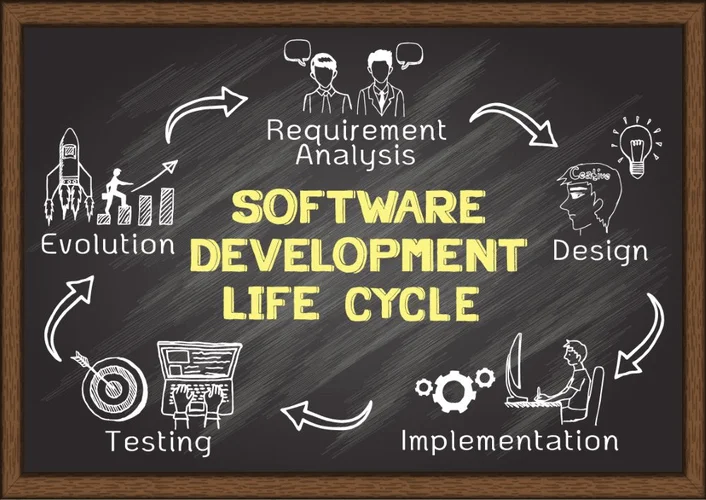
Traditional team software development life cycle roles and responsibilities
Usually, a model is created after conducting an interview, referred to as business analysis. The interview consists of a facilitator asking a series of questions designed to extract required information that describes a process. The interviewer is called a facilitator to emphasize that it is the participants who provide the information. The facilitator should have some knowledge of the process of interest, but this is not as important as having a structured methodology by which the questions are asked of the process expert.
